










The center of the soul has an unrestrainable need which demands satisfaction. In reality, God alone can answer this need and the only solution is to immediately take the road leading to Him. The soul must converse with someone other than itself. Why? Because it is not its own last end; because its end is the living God, and it cannot rest entirely except in Him. -Fr. Réginald Garrigou-Lagrange, O.P.
I’ve always considered myself an intuitive person. Over the years, I’ve even taken a certain pride in being “self-aware.” I notice my moods, consider my strengths and weaknesses, and I try to be honest about them. But sometimes that very self-awareness becomes a subtle trap. I’ve caught myself inwardly judging someone as “not very self-aware,” and in that quiet judgment, I realize I’m revealing something about myself. If I feel superior because I notice my flaws while they don’t seem to notice theirs, am I as self-aware as I think I am? And if so, how helpful is that, really?
The difference between self-awareness and self-knowledge is important. Self-awareness notices and names things within me; things like patterns, emotions, or tendencies. But it can also remain shallow, or worse, feed my pride. Self-knowledge, on the other hand, goes much deeper. It places me before the truth of who God is, and in that light, reveals who I really am.
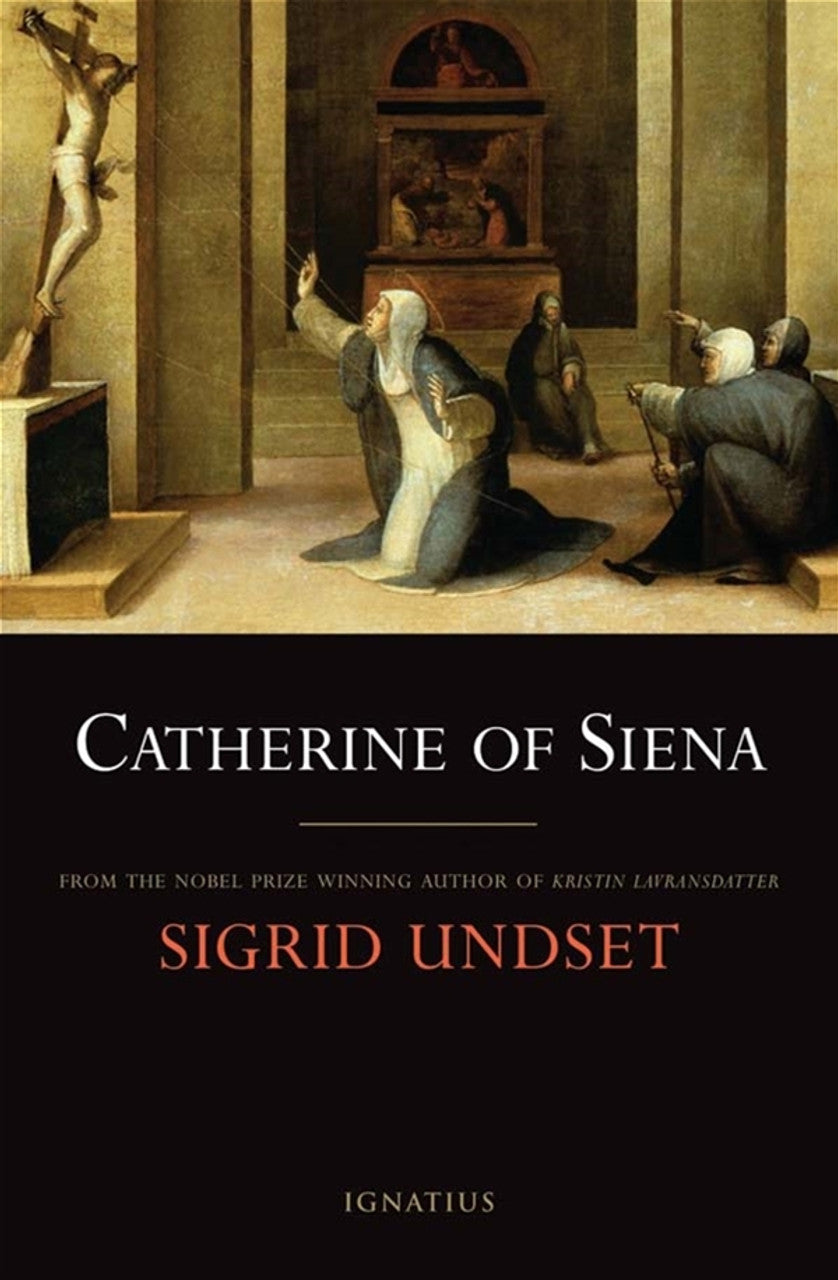
In a vision, Jesus asked St. Catherine of Siena, ( The Dialogue of St. Catherine of Siena):
Do you know, daughter, who you are, and who I am? If you know these two things, you will be blessed. You are she who is not; whereas I am He who is. -The Dialogue of St. Catherine of Siena
We might be tempted to be offended by this dialogue between Our Lord and St. Catherine. When I first read this, I admit it was a bit shocking to my sensibilities.
But why is that? Could it be our pride is offended?
The more united we are with Our Lord, the closer we come to seeing ourselves as we truly are. This is one of the reasons why prayer is so essential for true self-knowledge. Yet, one obstacle to seeing ourselves as we are might be that we have become somewhat complacent in our prayer.
Even if we think we pray a lot, we may still fail to give God our best time or effort. When we do come before God in regular prayer and quiet our minds long enough to attempt to hear His voice, we are recognizing our need for Him.
This is the heart of self-knowledge—not simply cataloging my weaknesses, but coming to see myself as utterly dependent on the One who gives me life.
St. Catherine urged her followers to enter what she called the “cell of self-knowledge.” Not meant only for the religious, the cell is an invitation to all. While her earliest encounters with God took place in the solitude of her bedroom in her parents’ home—a real, physical room—she also used the cell as a metaphor: an interior refuge where, in God’s presence, we honestly examine our hearts and allow His love and truth to form who we are.
Thus, becoming accustomed to regularly taking time for such inner experience is a basic first step (and an on-going one) in the spiritual journey. St. Catherine formulated the importance of the spiritual journey as growth in knowledge of God and of self before God in order to be transformed in the capacity to love. Time in the cell was necessary for this dynamic to take place.
Dwelling in the cell, that is, spending time in prayer with God, even if we are not in a place of solitude, is highlighted in the first paragraph of The Dialogue:
"She [the soul][1] has for some time exercised herself in virtue and has become accustomed to dwelling in the cell of self-knowledge in order to know better God’s goodness toward her, since upon knowledge follows love. And loving, she seeks to pursue truth and clothe herself in it. "(Dialogue 1.25)[2]
I am grateful to St. Catherine for giving us the image. There is something very tangible that comes to mind when I consider myself in a "cell" where I can be honest and exposed. In that cell, we come face to face with our nothingness (not worthlessness), and our dependence upon God and with His greatness. When we see ourselves as the sinners we are, our response is naturally to long for God and His mercy. St. Catherine and many other saints understood that when we know who we are before God, pride is silenced and illusions fall away.
But if the cell of self-knowledge is so life-giving, why do we resist it? Simply put: because it is uncomfortable. To face ourselves honestly means coming to terms with our sin, weakness, and need for God. Pride resists this. We tend to want to escape from it. Distractions, whether in St. Catherine’s day with “amusing books" or in ours with Netflix, smartphones, and Google calendars, pull us out of that sacred space where God wants to meet us. While it is difficult, it is not impossible to put these things aside and enter into a communion with God. Yet, if I am honest, I often prefer noise to silence.
Perhaps we don't appreciate the true vaue of deliberately spending time with God. And yet, without entering the cell, we cannot grow in love for God, and we cannot truly see ourselves as we are - as creatures of God. While we can at times tune out the external world and draw our thoughts toward God, making real time for silence in our daily life is important.
"If you look in murky and turbulent waters, you cannot see the reflection of your face. If you want to see the face of Christ, stop and collect your thoughts in silence, and close the door of your soul to the noise of external things." -St. Anthony of Padua
"Watchfulness" is a term that comes to us from the Church Fathers and it means to guard our heart by placing our intellect as a watchman over it. It is easy to see how this discipline of watchfulness helps us discover the hidden motives behind our thoughts, words, and behavior in the light of God’s truth. Through this process, we can begin to understand ourselves better.
"Internally watchful persons can “see” themselves in the light of God’s grace and discover what is happening within the world of their interior self. They discover the strong and weak aspects of their character, and their capabilities and talents; they begin to perceive their secret inclinations and aspirations." - Catechism of the Ukrainian Catholic Church (as referenced in the Good Catholic series, School of Prayer)
This is why the difference between self-awareness and self-knowledge is so crucial. Self-awareness might tell me, “I get anxious in crowds,” “I tend to procrastinate,” "I sometimes fill silence with noise". That’s useful, but it doesn’t tell me who I am. Self-knowledge places my anxieties, my tendencies, and my gifts in the light of God. It reveals that when we truly know ourselves and feel God’s love, we desire God more, and we begin to understand and act according to how God sees things. Without God, self-knowledge is impossible—because apart from Him, I am easily blinded and I cannot know what I was made for.
St. Catherine’s invitation to enter the cell of self-knowledge is for all of us, not only monks or nuns who might have actual "cells" where they go to pray. The cell can be a physical space, like a prayer corner, or simply the interior stillness we create when we turn to God in prayer. It is there that we learn the truth about ourselves. Not the curated image we show the world, not the shallow observations of self-awareness, but the deeper truth that we are nothing without God.
I have struggled at times with the reality of self-knowledge and how to begin turning to God in that knowledge. But I have discovered that "arrow prayers" (prayers lifted up to God in a moment) can help. Below are 5 simple, focused prayer prompts you can use to enter that interior “cell” St. Catherine so beautifully describes:
1. Holy Spirit, illumine my heart so I may meet the truth of who I am in love.
2. My God, help me to see myself as I am.
3. Jesus, heal me from self-love and teach me humility rooted in Your mercy.
4. Lord, I bring you this sin of mine [name it]. Show me how it shapes me and set me free from its hold. Teach me to know myself more and to desire only You.
5. The Jesus Prayer (first prayed by the Eastern Desert Fathers): "Jesus Christ, Son of God, have mercy on me, a sinner".